

You turn the key, the head unit lights up, and the trunk stays silent. No bass, no glow from the amp, nothing. It's tempting to assume the amplifier died and start shopping for a new one, but in most cases the amp is perfectly fine. An amplifier only needs three things to switch on, and when one of them goes missing, the result looks exactly like a dead amp. Before you spend money on a replacement, work through the checks below in order. Most problems show up within the first four.
Start With the Symptom You're Seeing
"Not turning on" can mean a few different things, and each one points to a different part of the system. Match what you see to the table below, then jump to the checks that apply.
| What You See | Most Likely Cause | Start With |
|---|---|---|
| No power light at all | Missing power, ground or remote signal | Checks 1 to 5 |
| Power light on, but no sound | Signal, settings or speaker wiring | Checks 6 and 7 |
| Turns on, then shuts off | Voltage drop, heat or a short | Check 8 |
| Red or protect light | Amp is protecting itself from a fault | Our protect mode guide |
| Works sometimes, cuts out randomly | Loose connection or weak ground | Checks 3 and 4 |
For most of these checks you'll want a basic digital multimeter. It turns guesswork into a two-minute test and will save you from replacing parts that were never broken.
1. Check the Main Inline Fuse
Start at the battery. The main fuse sits within about 18 inches of the positive terminal, and if it's blown or loose, the amp gets no power at all. Pull the fuse and look at it closely. On a glass AGU fuse you can usually see the broken strip inside. On a Mini ANL or ANL fuse, the break isn't always visible, so test it for continuity with your meter.
Also check that the fuse holder bolts are tight and free of corrosion. A green or white crust on the terminals can block current even when the fuse itself is fine. If the fuse holder looks tired, a nickel plated Elite Audio EA-MANLFH-02 Mini ANL Fuse Holder and matching Mini ANL fuses are $14.99 each. Not sure what rating you need? Our guide on what size fuse your car amplifier needs has a full chart.

Important Note: If the main fuse blew, something caused it. Don't just drop in a new one and walk away. Inspect the full length of the power wire for spots where it rubs against metal, especially where it passes through the firewall. A fuse that blows again right away means there is still a short somewhere in the run.
2. Check the Fuses on the Amplifier
Many amplifiers have one or more fuses built into the chassis, usually near the power and ground terminals. These blow for different reasons than the main fuse, often because of a speaker wiring short or an internal fault. Pull each one and test it. If one is blown and the others are fine, that's a strong clue that the problem is on the output side, such as a speaker wire touching the chassis.
3. Measure Voltage at the Amp's Power Terminal
Now confirm that power actually reaches the amplifier. Set your meter to DC volts, put the red probe on the amp's +12V terminal and the black probe on the amp's ground terminal. With the engine off you should see around 12.4 to 12.7 volts. With the engine running, expect roughly 13.8 to 14.4 volts.
If the reading is zero, the problem is between the battery and the amp, usually the main fuse or a loose ring terminal. If you see power at the battery but far less at the amp, the wire or a connection along the way is adding resistance. Undersized or low quality wire is a common culprit, which we explain in detail in our OFC vs CCA wire breakdown.
Most amplifiers also have low-voltage protection and won't turn on if the supply drops below roughly 10 to 11 volts. A weak or aging battery can cause this on its own, especially on cold mornings.
4. Test the Ground Connection
A bad ground is the single most common reason a car amp is not turning on or cuts in and out. The amp can have perfect power and still do nothing if the ground path is weak. Look at where the ground wire bolts to the chassis. It should be on bare, clean metal with all paint, primer and seam sealer scraped away, and the bolt should be tight.
To test it, put one meter probe on the amp's ground terminal and the other on the battery's negative post. Set the meter to DC volts and turn the system on. The reading should be very close to zero. Anything more than a few tenths of a volt means the ground is adding resistance.
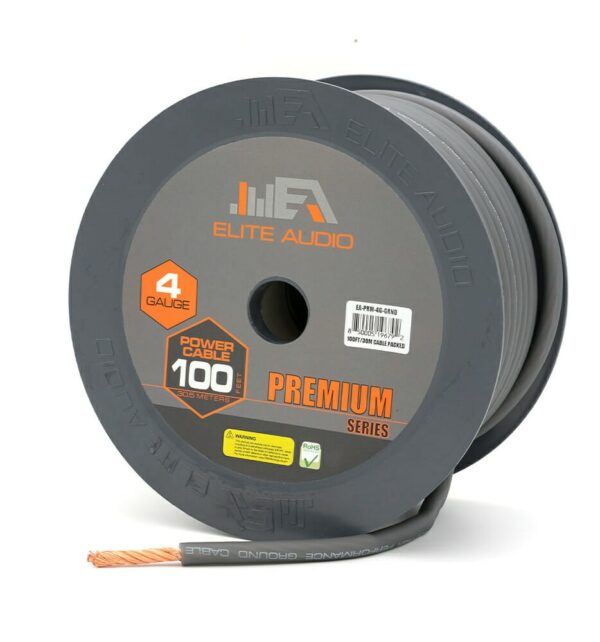
The ground wire should also match the power wire gauge and be as short as practical. If yours is thinner than the power cable or runs several feet to reach a bolt, replace it. The Elite Audio EA-PRM4G-GRND 4 Gauge Ground Wire is $89 for 100 feet, and the 8 AWG Ground Cable is on sale at $75.65 (was $89) for smaller systems.
Pro Tip: Never use a seat bolt or seatbelt anchor as a ground point. Those bolts are often isolated by washers or coated threads and make a poor electrical connection. Pick a clean section of body panel or frame rail near the amp, scrape it to shiny metal, and use a star washer to bite into the surface.
5. Check the Remote Wire Signal
If power and ground both check out, the remote wire is the next suspect. The remote turn-on wire carries a small 12 volt signal from your head unit that tells the amp to switch on. Without it, the amp has everything it needs and simply waits. A remote wire not working is one of the top reasons an amp shows no power light at all.
With the head unit on, measure between the amp's REM terminal and ground. You should read close to 12 volts. If you get zero, follow the wire back to the head unit. Look for a loose crimp behind the dash, a wire pinched by a panel, or a connection to the wrong lead. On aftermarket stereos, the remote output is usually a blue and white wire. Plain blue on some units is the power antenna lead, which only switches on in radio mode and turns off when you play Bluetooth or USB.
Remote Wire Problems on Factory Stereos
Most factory radios don't have a remote output at all. In that case, installers usually tap an accessory circuit that switches on with the ignition, or use a line output converter with signal sensing turn-on. You can find options in our interfaces collection. Some amplifiers also have a built-in auto turn-on mode that senses the speaker signal. If yours has this feature, make sure the switch on the amp is set correctly for how you've wired it.
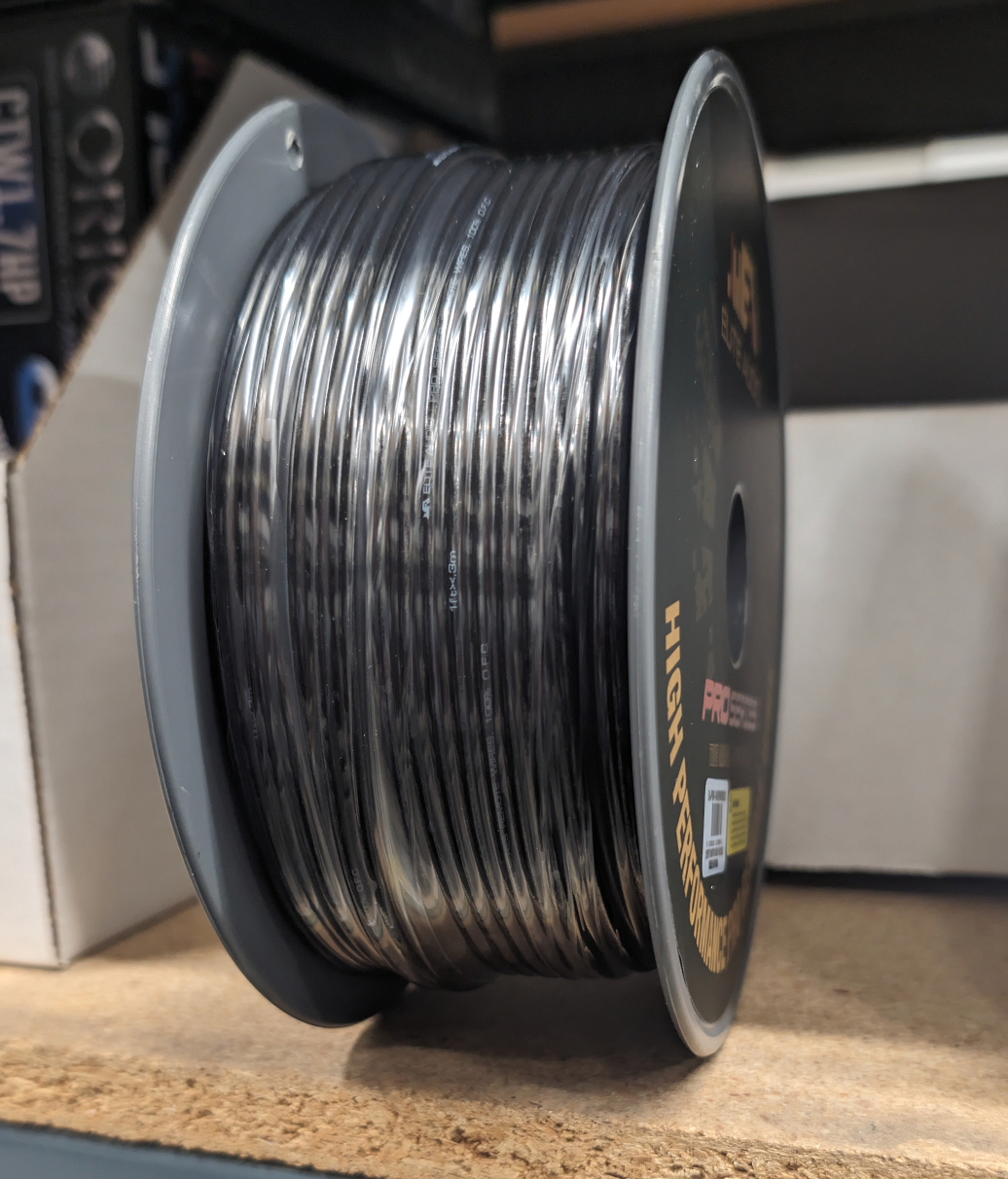
Running two or more amps from one head unit remote lead can also cause trouble, because the head unit output is only designed to supply a small amount of current. If one amp turns on and the other doesn't, try a relay to share the signal. When you rewire, use a fresh run like the Elite Audio REMOTE WIRE 16GA Copper at $55 for 250 feet.
6. Power Light On but No Sound
If the amp powers up and the light is green or blue but nothing comes out of the speakers, you've moved past power problems and into signal problems. This is where the amp has power but no sound, and it's almost always a settings or connection issue rather than a broken amp.
Start with the RCA cables. Make sure both ends are pushed in fully and that they're plugged into the correct outputs on the head unit. Swap the cables to a different output pair, or try a known good set from our RCA cables collection, to rule out a broken cable. If you're using speaker level inputs instead, confirm the input selector on the amp is set to high level rather than low level.
Then check the head unit settings. Subwoofer outputs can be turned off or set to zero in the audio menu, and some stereos reset these after a battery disconnect. If you have a remote bass knob, make sure it isn't turned all the way down. That one catches more people than you'd expect.
7. Check Amp Settings and Speaker Wiring
An amp can be working perfectly and still sound silent if its settings are wrong for the speakers connected to it. Look at the gain first. If it's turned to the minimum, output will be extremely low. Then check the crossover. A low pass filter set to 50 Hz on an amp feeding door speakers will cut nearly everything, making it seem like nothing is playing.
Next, follow the speaker wires from the amp to each speaker or sub. Look for loose terminals, a strand of wire touching the chassis, or a speaker wired to the wrong channel. If you recently installed a new sub, double check the voice coil wiring, because a mistake there can drop the impedance below what the amp supports. Our guide on RMS vs peak power also covers how to match amp output to your speakers correctly.
8. When the Amp Turns On, Then Shuts Off
An amp that powers up for a few seconds or minutes and then goes dark is usually reacting to a problem rather than failing. The most common causes are voltage dropping under heavy bass, the amp overheating in a tight space, or a short that only appears when the speakers move.
Measure voltage at the amp while the system plays loudly. If it drops well below 12 volts on bass notes, your electrical system can't keep up. On systems above about 1000 watts RMS, the fix is usually upgraded wiring and more battery reserve. The Elite Audio EA-PROK0-BIG3 Upgrade Kit at $199 strengthens the charging path, and a secondary AGM battery like the XS Power XP750 at $119.99 adds reserve for smaller builds. Larger systems can step up to options in our batteries and chargers collection.

If the amp is hot to the touch when it shuts off, look at where it's mounted. Under a seat with carpet packed around it or inside a sealed compartment, heat has nowhere to go. Give it at least a couple of inches of open air on all sides.
Signs the Amplifier Really Is Faulty
After all eight checks, there are a few clear signs the amp itself has failed. If it has full voltage at power and remote, a solid ground reading near zero, good fuses, and still shows no light at all, the internal power supply has likely failed. A burning smell, a visible scorch mark on the circuit board, or a fuse that blows the instant the remote wire gets 12 volts with no speakers connected are also strong indicators.
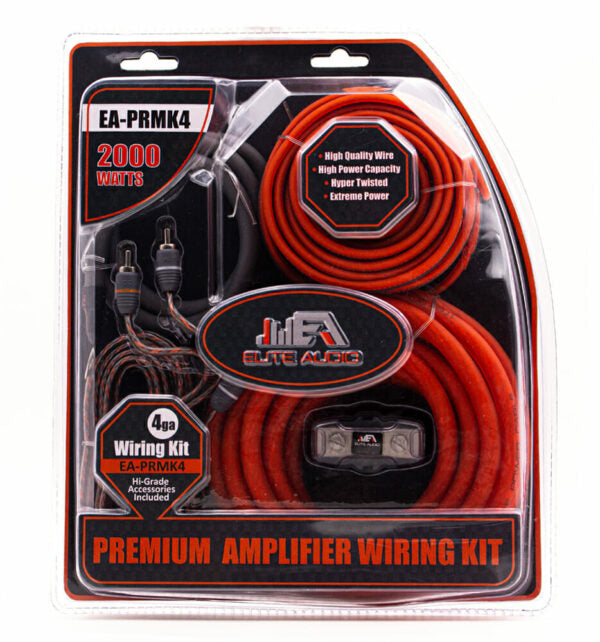
At that point, replacing the amp is the right move. For subwoofer systems, the AudioControl EPIC500 at $149 and EPIC1000 at $239 are dependable monoblocks. For door speakers, the AudioControl EPICFOUR at $199 is a solid 4-channel choice. If your old wiring was part of the problem, replacing it at the same time with a complete kit like the Elite Audio EA-PRMK4 4 Gauge Amp Kit at $65.99 makes sure the new amp starts life on a clean install.
A Quick Checklist to Keep
When an amp won't power up, run through this short list in order. It covers the majority of issues in just a few minutes.
- Main inline fuse intact and holder tight
- Onboard amp fuses intact
- 12 volts or more between amp power and ground terminals
- Ground on bare metal, reading close to zero volts against battery negative
- Around 12 volts on the remote terminal with the stereo on
- RCA or speaker level inputs connected and the input switch set correctly
- Gain, crossover and head unit sub settings not turned down or off
- Voltage holding above 12 volts while the bass is playing
Common Questions
Why does my amp have no power light even though the fuse is good?
The most common causes are a missing remote turn-on signal or a weak ground. Measure the REM terminal for about 12 volts with the head unit on, then test the ground connection. Either one can stop the amp from switching on even when the power wire and fuse are fine.
Can a bad battery stop a car amp from turning on?
Yes. Most amplifiers won't power up if the supply voltage drops below roughly 10 to 11 volts. A weak, sulfated or corroded battery can sit just above starting voltage for the car but below what the amp needs, especially when the engine is off.
How do I know if my remote wire is not working?
Set a multimeter to DC volts, place the red probe on the amp's REM terminal and the black probe on ground, then turn on the head unit. If you don't see close to 12 volts, the remote signal isn't reaching the amp. Check the wire connection behind the stereo and along the full run.


