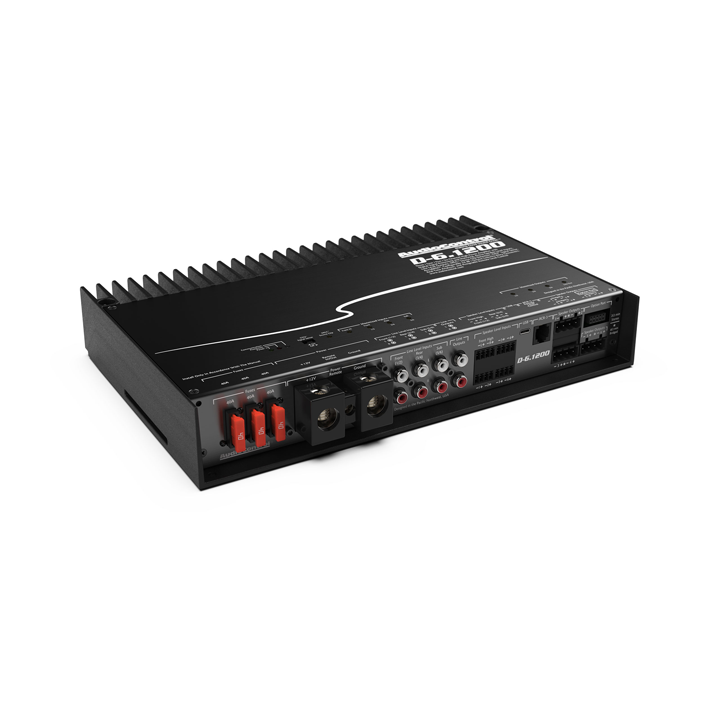

Should you pick a 4-channel amplifier or a 5-channel one? Both are multi-channel amps that can hugely improve clarity, volume, and control over stock systems, but they serve slightly different goals. Understanding how each type divides power, handles bass, and fits into your car helps you avoid buying more than you need—or settling for less than you want.
How 4-channel Amps work?
A 4-channel amp takes the speaker outputs and gives them dedicated power to drive two or four speakers—usually door speakers, rear speakers, or a pair of component sets. Because power is split evenly across the four channels instead of being funneled into a sub channel, the result is tighter control over mids and highs, cleaner imaging, and less distortion in everyday listening.
This makes 4-channel amps ideal if:
-
You’re upgrading door speakers, components, or factory replacements.
-
You want precise tuning and separation across the cabin.
-
You plan to add a sub later with a separate mono amp, rather than immediately.
A 4-channel is often smaller, simpler to fit, and easier to tune for clarity first. It also lets you bridge two channels later to power a small sub, giving you a step-by-step upgrade path without committing to a full multi-amp system right away.
What 5-channel amps add, and who benefits most
A 5-channel amp adds a dedicated subwoofer output inside the same chassis. That extra channel is designed like a mono block: it handles the heavy low-frequency load, while the other four channels power your main speakers. The main benefits include simpler wiring, a cleaner install, and the ability to run a full system from one single device.
You’ll get the most value from a 5-channel amp when:
-
You want to power front and rear speakers plus a sub immediately.
-
Space is tight and you’d rather avoid a second amplifier.
-
You’re looking for a tidy, everyday setup that still sounds powerful and balanced.
Modern 5-channel models often include useful filters, protection circuits, and remote levels, so they can pair well with factory or aftermarket head units without extra modules. For many daily drivers, that combination of convenience and performance is hard to beat.
4 Channel vs 5 Channel Amp Quick comparison
|
Attribute |
4-channel amp |
5-channel amp |
|---|---|---|
|
What you power |
2–4 speakers |
2–4 speakers + 1 sub |
|
Install complexity |
Moderate |
Lower overall, one amp |
|
Space needs |
Small to moderate |
Slightly more, but compact |
|
Tuning control |
Strong for mids/highs |
Balanced overall, includes bass |
|
Best for |
Clarity or step-by-step upgrades |
One-box full system |
When to choose a 4-channel amp
Choose a 4-channel if your priority is cleaner vocals, better staging, and stronger control at the speaker level. If you’re working with tighter budgets or a phased build—speakers first, bass later—this gives you the clearest improvements right away. It’s also helpful when you want to experiment with active crossovers or when your music tastes lean toward detailed, high-resolution listening rather than heavy bass.
When to choose a 5-channel amp
Go 5-channel if you already know you want a subwoofer in the system today, or if you want fewer boxes, less wiring, and a professional-looking install in a small vehicle. It’s smart for drivers who want a full, balanced sound without juggling two amplifiers, and for anyone who wants to avoid future rewiring when adding a sub later.
Practical picks you can actually use
Below are a couple of examples, chosen for real-world power, reliability, and everyday usability. These are good starting points whether you lean toward a 4-channel or 5-channel device.
Best overall 5-channel, tidy full System
AudioControl EPIC Series 5-Channel Amplifier EPICFIVE

Why this is a strong pick
-
Real power for a small amp: rated for up to 150 W × 4 + 500 W × 1 at 2 ohms, and even 700 W to the sub at 1 ohm in the right configuration. That’s enough to run strong door speakers and a legit sub without needing a second chassis. Specs show Class D efficiency, variable HP/LP filters, and subsonic control—useful tools for dialing in both speakers and bass.
-
Proven satisfaction: Customer feedback from a reputable retailer shows real users finding the EPICFIVE easy to install, powerful, and sounding great with both small door speakers and a sub. Several reviews highlight clean power, versatility, and value for money.
-
Everyday practicality: The included remote knob, compact chassis, and sensible wiring requirements mean less guesswork in tight trunks or under seats.
Tradeoffs to know
-
As with many compact amplifiers, ultimate output depends on your car’s electrical system and wiring quality—plan for proper gauge and a solid fuse.
-
If you later plan very high power subs or multiple subs, adding a separate high-power mono might outgrow even a strong 5-channel, though for most drivers it’s more than enough.
Best fit: daily drivers, compact builds, or anyone replacing a single amp that handles everything cleanly.
High-quality 5-channel for tight spaces or louder builds
Sundown Audio HZ-900.5 Horizon Series 5-Channel Amplifier

Why this stands out
-
Balanced output with strong bass: delivers 100 W × 4 to main speakers and up to 500 W to the sub, plus bridging options for midrange power. Specs include adjustable HP filters for channels 1–4 and LP plus subsonic filters for the sub channel—serious control for a compact amp.
-
Confirmed happy users: a verified buyer review on a major retailer notes it’s a small unit with plenty of power for front and rear speakers, and stable down to 1 ohm—exactly the sort of reliability you want in a complete system amp.
-
Cool, compact design: heavy-duty aluminum heat sink and Class D efficiency make it suitable for installs where heat and space are concerned.
Tradeoffs
-
The higher price than some budget models reflects its stronger feature set; for ultra-tight budgets, the EPICFIVE above is cheaper.
-
Very heavy bass fans might eventually want more than one sub or a more extreme setup, but for a single-sub daily build this is excellent.
Best fit: users who want a slightly more premium, robust 5-channel with real tuning flexibility and a compact footprint.
Strong 4-channel for clarity-first systems
AudioControl A600.4 Altitude Series 4-Channel Amplifier

Why this is worth a look
-
Cleaner, detailed drive for speakers: up to 150 W × 4 at 2 ohms and bridgeable to 300 W for a pair, with tight distortion control and very high signal-to-noise performance. That combination is ideal for crisp, clear front-stage sound when you’re focused on music quality more than maximum bass output.
-
Advanced design in the chassis: features like Linkwitz-Riley crossovers, EV and start-stop compliance, and optional remote control add professional-grade flexibility. It’s engineered for efficient, reliable operation without a massive box.
-
Great match for step-by-step builds: powerful enough to drive strong component speakers now, and bridgeable for a later small sub, giving a long runway for future upgrades.
Tradeoffs
-
No dedicated built-in sub channel, so a later sub upgrade requires bridging or another amp.
-
Slightly higher cost than ultra-budget four-channels, but offers more control and cleaner performance, which is valuable for everyday listening.
Best fit: Clarity-focused upgrades in compact cars, or anyone starting with top tier speakers first.
Premium 4-channel for higher-end, low-voltage performance
Sundown Audio SALT-200.4 4-Channel Amplifier

Why it’s a standout 4-channel
-
Designed for real-world voltages: the SALT series focuses on delivering strong power at typical vehicle voltages rather than only at elevated output. That ensures stable, usable power without requiring an oversized electrical upgrade.
-
High output, efficient design: supports high RMS per channel and comes with professional protection and tuning options. OEM and installer references highlight thermal, voltage, and speaker-short protection and top-tier filter flexibility. The series is built for precise, dependable performance.
-
Long-term system builder: this is a great base for a higher-quality speaker system that might later add a dedicated sub amp. It’s especially useful for enthusiasts who care about both detail and reliability over many years.
Tradeoffs
-
Typically, more expensive than entry-level amps due to its higher-grade engineering and components.
-
Still a four-channel; you need a separate sub solution later if you want deep bass.
Best fit: discerning listeners, compact builds needing strong mid/high performance, or any car where electrical realism and reliability matter.
How to pick among these
-
Decide if a sub is a must now or later. Now, go 5-channel. Later, 4-channels are easy and often cheaper up front.
-
Balance space and wiring. If your car has little cargo space or you want a barely-noticeable install, a tidy 5-channel avoids a second box.
-
Match power to speakers and budget. Don’t overspend on power you won’t use; aim for cleaner, controllable output first, then expand.
Each choice here can form the backbone of a strong car audio system. The right one depends on your goals—pure clarity and stage, or a complete, balanced sound with real bass from day one.