
You installed a subwoofer, turned up the bass, and still something feels missing. The low-end is louder, but it does not feel deeper. Some songs hit hard, while others sound thin. The factory stereo may look modern, the amplifier may have enough power, and the subwoofer may be capable, but the signal feeding the system may already be weak or incomplete.
That is where many car audio buyers confuse a bass boost knob with a real bass processor. A regular bass boost raises part of the bass that already exists. The Epicenter Pro works differently. It is designed to restore missing low-frequency content, improve signal strength, and give better control over how the subwoofer responds.
For drivers using factory radios, compressed music, streaming audio, or serious subwoofer systems, the AudioControl Epicenter Pro is not just about more bass. It is about better low-end control before the signal reaches the amplifier.
Louder Bass vs Restored Bass
A regular bass boost is simple. It increases a fixed low-frequency range, usually through an amplifier, equalizer, or head unit setting. That can help if the system only needs a small bump, but it does not solve missing bass information.
Bass restoration works on a deeper level. A bass restoration processor analyzes the incoming signal and helps rebuild low-frequency content that may have been reduced by factory audio processing, MP3 compression, streaming quality, or bass roll-off.
That difference matters because boosting a weak signal can make problems louder. Restoring and controlling the signal gives the subwoofer amplifier something better to work with.
Why a Regular Bass Boost Is Not the Same as Bass Restoration
A regular bass boost usually turns up one part of the low-frequency signal. If the system already has strong bass and just needs a small lift, that can be useful. But when the source signal is missing low-end detail, bass boost cannot rebuild what is not there.
This is why some systems sound louder but not cleaner after boost is added. Too much boost can push the amplifier input signal harder, reduce amplifier headroom, and create clipping or distortion. The bass may become boomy, muddy, or slow instead of deep and controlled.
Bass boost is also limited because it usually does not offer much control over the bass shape. It may increase one fixed frequency area, even if that range does not match the subwoofer, enclosure tuning, vehicle cabin, or music style.
What Makes the Epicenter Pro Different
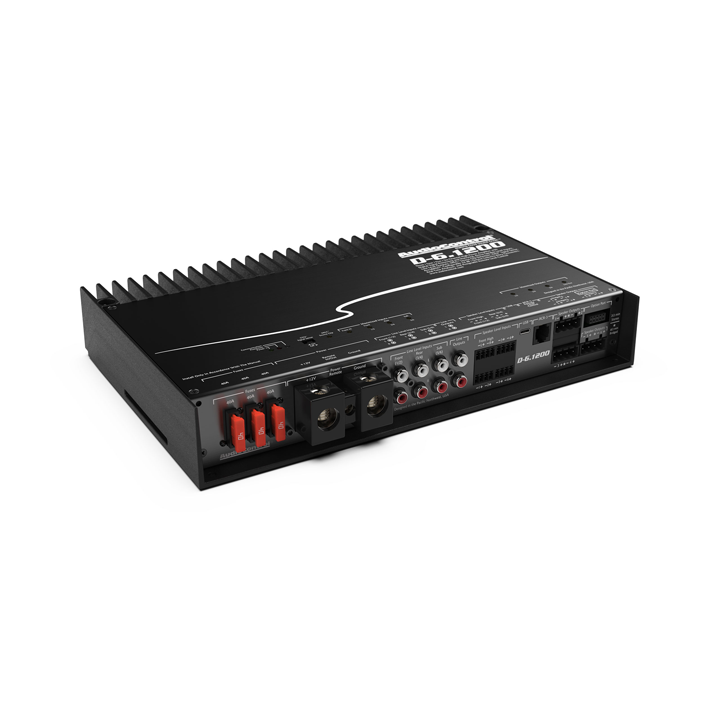
The Epicenter Pro is a car audio bass processor, bass restoration processor, and high-voltage line driver in one unit. Instead of simply raising bass level, it helps restore low-frequency signal content and sends a stronger preamp signal to the amplifier.
The AudioControl Epicenter Pro uses advanced digital bass restoration technology to help recover bass that can be lost in factory audio systems and compressed music sources. It also includes ParaBASS control, which lets the user shape the bass frequency, width, and level with more precision than a basic knob.

Its integrated high-voltage line driver is another major difference. With adjustable output voltage and up to 9 Vrms maximum output level, it can help match the signal to serious amplifier and subwoofer systems. That stronger RCA output gives the subwoofer amplifier a cleaner signal foundation, instead of forcing the installer to overuse amplifier gain.
Epicenter Pro vs Regular Bass Boost
| Buyer Question | Regular Bass Boost | Epicenter Pro |
|---|---|---|
| What does it mainly do? | Turns up existing bass | Restores missing bass and strengthens signal |
| Does it rebuild lost low-end? | No, it only boosts what is already there | Yes, it is designed for bass restoration |
| How much control do you get? | Usually one knob or fixed boost | ParaBASS control for frequency, width, and level |
| Can it help with factory bass loss? | Limited | Yes, especially with factory audio bass loss and bass roll-off |
| Does it improve signal voltage? | No | Yes, it works as a high-voltage line driver |
| Can it protect subwoofers? | Usually no | Built-in subsonic filter and PFM high-pass filter |
| Best for | Small bass lift | Serious subwoofer builds and restored low-end response |
| Risk if overused | Clipping, distortion, muddy bass | Still needs proper tuning, but offers more control |
| Value in larger builds | Basic support | Better signal control, tuning range, and low-end clarity |
Factory Audio Bass Loss: Why Your New Sub May Still Feel Weak
Many OEM audio systems are tuned to protect factory speakers, not to feed aftermarket subwoofers. At higher volume, the factory stereo may reduce bass to prevent small door speakers or factory subs from being damaged. This is known as bass roll-off.
When you add a subwoofer amplifier to that type of system, the bass can still feel weak because the low-frequency signal has already been reduced before it reaches the amp. A regular bass boost may raise that reduced signal, but it does not fully solve the missing information.
The Epicenter Pro helps by restoring low-frequency content before the subwoofer amplifier receives the signal. This is especially useful in vehicles where the factory radio is staying in place but the owner wants real aftermarket bass response.
Compressed Music Bass Loss Is Another Problem
A lot of music today comes from streaming audio, compressed music files, or older MP3 libraries. Depending on file quality, playback source, and compression, some low-frequency detail can be reduced or changed. The track may still sound loud, but the bass response may feel thin or incomplete.
The Epicenter Pro does not turn a poor recording into a perfect master. It also does not replace a good subwoofer, proper enclosure, clean wiring, or correct amplifier tuning. But it can help restore low-end impact when the music source lacks fullness.
For drivers who switch between streaming apps, Bluetooth audio, factory media systems, and saved music files, this type of low-frequency enhancement can make the system feel more consistent from song to song.
ParaBASS Control: More Useful Than One Bass Knob
A basic bass boost knob usually changes only the amount of boost. ParaBASS control gives the user more tuning control by adjusting three important parts of bass response: the frequency area, the width of the effect, and the level.
This matters because not every listener wants the same type of bass. One driver may want deep low-end weight for rap, trap, or electronic music. Another may want tighter bass that blends smoothly with front speakers and rear speakers. A third may want strong SPL impact without making the system sound loose.
ParaBASS makes the Epicenter Pro more useful for real system tuning. It helps match the bass processor to the subwoofer, vehicle cabin, amplifier power, enclosure type, and listening style.
High-Voltage Line Driver Benefit
The Epicenter Pro is also an integrated high-voltage line driver. This is important because a strong preamp signal helps the amplifier receive cleaner signal voltage through its RCA input. When the signal is stronger and cleaner, the installer does not have to rely as heavily on amplifier gain to create output.
Overusing gain can raise noise, distortion, and clipping risk. A stronger amplifier input signal can help improve gain structure and make the system easier to tune. With a maximum line input of 10 Vrms, maximum output level of 9 Vrms, signal-to-noise ratio greater than 105 dB, and frequency response from 10 Hz to 22 kHz, the Epicenter Pro is built for systems where signal quality matters.
This benefit becomes more important in serious builds with high-power amplifiers, larger subwoofers, and systems where low-end clarity matters as much as output.
Subsonic Filter and Smarter Subwoofer Control
Deep bass is good. Uncontrolled subwoofer movement is not. The Epicenter Pro includes a built-in subsonic filter to help protect subwoofers from harmful frequencies that may sit below the useful playing range of the system.
The PFM high-pass filter can be set at 24 Hz or bypassed. This is helpful when matching the processor to a sealed enclosure, ported subwoofer box, or different enclosure tuning. In a ported setup, playing too far below tuning can stress the subwoofer and waste amplifier power.
This makes the Epicenter Pro more complete than a standard boost control. It helps create stronger bass while giving the installer tools to keep that bass controlled.
ACR-4 Remote: Bass Control From the Driver Seat
The included ACR-4 remote gives dashboard control over bass restoration level. This is useful because every song is different. Some tracks already have strong bass. Others need help because of compression, factory processing, or weaker low-frequency content.
Instead of changing amplifier settings or head unit EQ every time, the driver can adjust the bass from the dash. That makes the system easier to use daily and helps keep bass response under control.
The LED status display also helps monitor bass restoration activity, giving users a clearer idea of how the processor is working with the signal.
When a Regular Bass Boost May Be Enough
A regular bass boost may still be enough for a simple setup. If the system has a small powered subwoofer, a basic amplifier, or only needs a light low-end lift, a bass boost knob can work fine.
It may also be enough if the factory stereo is not reducing bass, the source signal is already strong, and the listener does not need detailed subwoofer bass control. For smaller budget builds, simple can be the right choice.
The key is to avoid using bass boost as a fix for every problem. If the system sounds thin because the signal is missing bass, more boost is not always the answer.
When the Epicenter Pro Is the Better Choice
The Epicenter Pro is the better choice when the system needs real bass restoration, stronger signal voltage, and more tuning control. It makes sense for aftermarket subwoofers, high-power amplifiers, factory stereo integration, bass roll-off issues, compressed music playback, and serious low-frequency enhancement.
It is also a smart choice when the listener wants deeper bass without relying only on amplifier gain or a basic bass boost circuit. The combination of harmonic bass restoration, ParaBASS control, balanced inputs, high-voltage output, subsonic filtering, and ACR-4 remote gives the system builder more control from source signal to subwoofer output.
For buyers who care about both sound quality and SPL, that control is what makes the difference.
Tune It for Clean Bass, Not Just More Bass
The Epicenter Pro gives you more control, but it still needs to be tuned responsibly. Too much restoration, too much level, or the wrong subsonic filter setting can push the system beyond its clean range.
Set the processor to match the subwoofer amplifier, enclosure design, low-pass crossover, and listening goals. Watch for signs of distortion, bottoming out, or muddy response. Better bass should feel deeper, stronger, and more controlled, not just louder.
The best results come when bass restoration, amplifier gain, enclosure tuning, and subwoofer output all work together.
Shop the AudioControl Epicenter Pro at Elite Auto Gear
Elite Auto Gear offers the AudioControl Epicenter Pro for car audio builders who want more than a basic bass boost. It is built for bass restoration, low-frequency enhancement, stronger signal control, and serious subwoofer systems.
Shop the AudioControl Epicenter Pro at Elite Auto Gear if you want to restore missing bass instead of only boosting it. You can also compare Epicenter Pro options on Elite Auto Gear before upgrading your system.
If your build only needs a small low-end lift, a regular bass boost may be enough. But if the goal is restored bass, stronger signal voltage, better tuning control, and cleaner low-frequency enhancement, the Epicenter Pro is the more complete solution.