
Updated August 2026 · Reviewed by the Elite Auto Gear team
The ohm rating printed on a speaker or subwoofer box decides how much power your amplifier sends it, how loud it gets, and how much heat everything generates along the way. Get the match wrong and you end up with a distorted system, a hot amplifier, or gear that fails months earlier than it should.
Here's what actually separates 2 ohm and 4 ohm speakers and subwoofers, where each one makes sense, and how to wire a dual voice coil subwoofer to hit the impedance your amp wants.
What Speaker and Subwoofer Impedance Means
Impedance is the electrical resistance a speaker or subwoofer presents to the amplifier, measured in ohms (Ω). Lower resistance lets more current through, so the amp pushes more power into the speaker. Higher resistance restricts current, so the amp works less hard.
A 2 ohm speaker has lower resistance than a 4 ohm speaker, so it pulls more current and produces more output from the same amplifier. That doesn't automatically make it sound better. It changes how the whole system behaves, from volume to heat to long-term wear.
2 Ohm vs 4 Ohm Speakers: Quick Comparison
|
Feature |
2 Ohm Speaker |
4 Ohm Speaker |
|
Resistance |
Lower (2Ω) |
Higher (4Ω) |
|
Volume Output |
Higher |
Slightly lower |
|
Power Draw |
Greater |
Less |
|
Sound Clarity |
Can be less clean |
Typically clearer |
|
Amp Load |
Heavier |
Lighter |
|
Heat and Strain |
More |
Less |
|
Long-Term Reliability |
May run hotter |
More stable |
2 ohm speakers pull more wattage from the same amplifier, so bass hits harder and the whole system plays louder. If an amp is rated for 200 watts at 4 ohms, that same amp can often push 300 to 400 watts into a 2 ohm load. That extra power isn't free, though. More current means more heat, more strain on the amp's internal components, and a higher chance of premature failure if the amp isn't built for it.
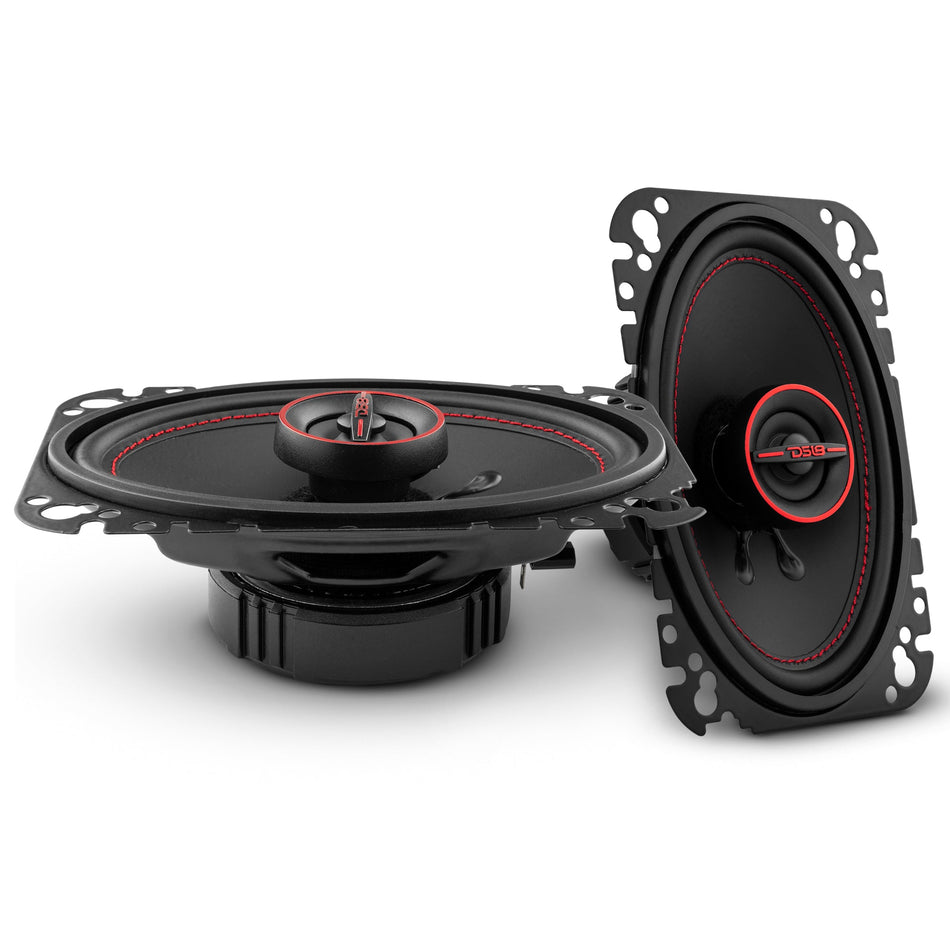
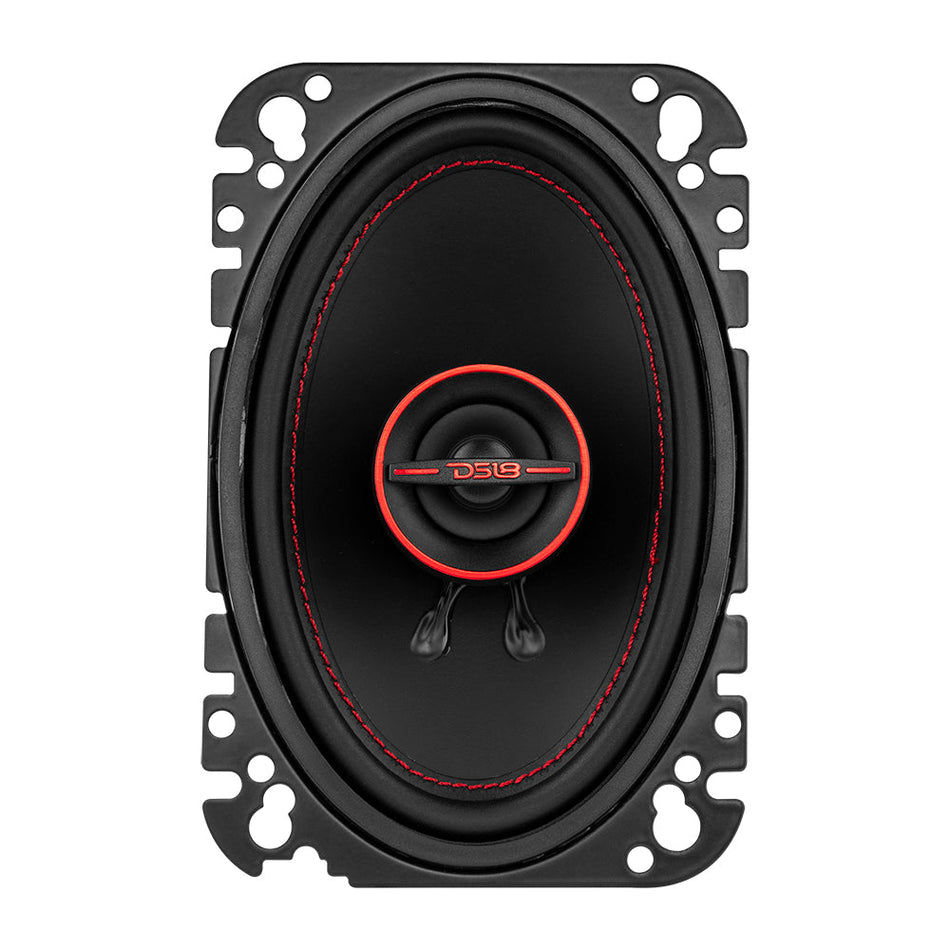
4 ohm speakers are the standard in most factory and aftermarket systems for a reason. They draw less current, run cooler, and tend to produce a cleaner, more balanced sound at normal listening volumes. For component sets, coaxials, and full-range setups where smooth highs and vocal clarity matter, 4 ohm is usually the safer, more consistent choice.
2 Ohm vs 4 Ohm Subwoofers: Sound Quality and Loudness
This is where most of the confusion actually lives, and the answer plays out a bit differently than it does for door speakers.

A 2 ohm subwoofer pulls more current from the amp, which means more raw output. Dropping from 4 ohms to 2 ohms roughly doubles the power an amp can deliver, and doubling power translates to about a 3 dB increase in loudness. That's a real, audible jump, not a minor spec sheet difference. If maximum SPL and trunk-rattling bass are the goal, a 2 ohm subwoofer paired with an amp built for that load will get there faster.
A 4 ohm subwoofer draws less power, so it won't hit the same peak volume from an identical amp. What it gives back is tighter control. Amplifiers grip a 4 ohm driver more precisely, which usually means punchier, more defined bass instead of loose, boomy low end. Listeners chasing accurate, controlled bass for genres like rock or acoustic tend to prefer how a 4 ohm sub behaves, while bass-heavy genres like hip-hop or EDM often lean toward 2 ohm setups since raw output matters more than fine detail in that kind of low end.
Neither impedance is universally better for sound quality. A properly powered 4 ohm sub in a well-built enclosure will usually sound cleaner than an underpowered 2 ohm sub fighting a mismatched amp. Amp match, enclosure design, and power handling affect sound quality more than the ohm number by itself.
Is 2 Ohm Better Than 4 Ohm?
Not automatically. 2 ohm is the better choice if the priority is maximum volume and the amplifier is rated to handle a 2 ohm load safely. 4 ohm is the better choice if the priority is sound clarity, amp longevity, and easier compatibility with standard gear. The right answer depends on the amp already in the system, not just personal preference.
Amplifier Compatibility Matters
Check the amp's rated impedance before choosing a speaker or subwoofer. Some amplifiers aren't stable at 2 ohms and will overheat, distort, or shut down if forced to drive that load. Others are built specifically for 2 ohm or even 1 ohm operation and won't perform at their best on a 4 ohm load.
Most amplifiers are safely rated down to 4 ohms, which is part of why 4 ohm speakers and subwoofers are the easier, more plug-and-play option for standard systems. Going with 2 ohm can unlock more power, but only if the amp's spec sheet confirms it can handle that load without instability.
Wiring Dual Voice Coil (DVC) Subwoofers
Dual voice coil subwoofers give you control over the final impedance the amp sees, since each sub has two separate coils that can be wired in series or parallel.
|
Voice Coil Setup |
Wired in Series |
Wired in Parallel |
|
Dual 2 ohm coils |
4 ohm total |
1 ohm total |
|
Dual 4 ohm coils |
8 ohm total |
2 ohm total |
A single DVC sub with two 4 ohm coils can be wired down to 2 ohms in parallel or up to 8 ohms in series, depending on what the amplifier needs. That flexibility makes DVC subs useful in multi-sub setups or systems where the amp only has a limited number of channels available. Getting the wiring right is what lets a sub match the amp's sweet spot instead of running it inefficiently.
Can You Mix 2 Ohm and 4 Ohm Speakers?
Technically yes, but it takes some care. Mixing impedances on the same amp channel can cause the amp to favor the lower-resistance speaker, sending it more power than the higher-resistance one and throwing off the balance of the system. If the combined impedance drops below what the amp can safely handle, overheating or damage becomes a real risk.
If mixing is unavoidable:
- Confirm the total system impedance stays within the amp's rated range
- Run separate amps or channels for each impedance where possible
- Use an impedance calculator or talk to an installer before wiring anything permanently
Matching impedance across all speakers on a channel is still the safest, cleanest setup for most builds.
Choosing Between 2 Ohm and 4 Ohm for Your Build
Building a dedicated bass system around a 2 ohm subwoofer paired with a matched monoblock amplifier makes sense when the goal is maximum SPL. It's a common setup for single-sub and multi-sub builds chasing loud, aggressive bass.
A four-speaker door setup running off a 4-channel amp is a different priority entirely. There, 4 ohm component or coaxial speakers usually deliver a cleaner, more balanced soundstage, install more easily on stock wiring, and hold up better over years of daily driving.
For subwoofers specifically, run the numbers through an enclosure calculator or tuning frequency calculator before locking in an impedance, since box design affects how a 2 ohm or 4 ohm sub actually performs just as much as the wiring does.
Whatever the goal, the impedance needs to match what the amplifier is rated for. That single spec affects sound quality, heat, safety, and how long the gear lasts.
FAQs
What's the difference between 2 ohm and 4 ohm speakers? A 2 ohm speaker has lower resistance and draws more power from the amp, producing louder output but more heat and strain. A 4 ohm speaker draws less power, runs cooler, and typically delivers cleaner sound at normal volumes.
What's the difference between 2 ohm and 4 ohm subwoofers? The same power and heat trade-off applies, but the sound difference is more noticeable. 2 ohm subs hit harder and louder, while 4 ohm subs tend to sound tighter and more controlled since the amp has a better grip on the driver.
Is 2 ohm better than 4 ohm for sound quality? No. 4 ohm generally has the edge for clarity and control. 2 ohm has the edge for raw loudness. Neither is objectively better, they're suited to different goals.
Can I run a 2 ohm subwoofer on an amp rated for a 4 ohm minimum? No. Running a load below what an amp is rated for can overheat or permanently damage it. Always check the amp's minimum stable impedance before wiring anything.
Do 2 ohm subwoofers sound worse than 4 ohm subwoofers? Not inherently. A well-powered 2 ohm sub in a properly built enclosure can sound excellent. The weaker sound quality people associate with 2 ohm setups usually comes from an underpowered or mismatched amp, not the impedance itself.