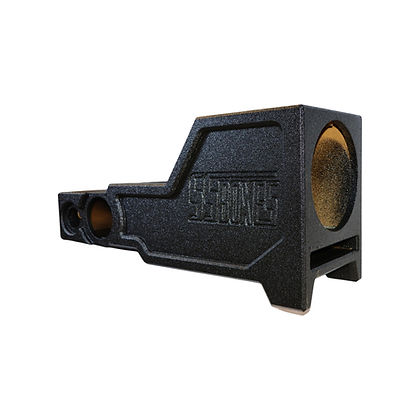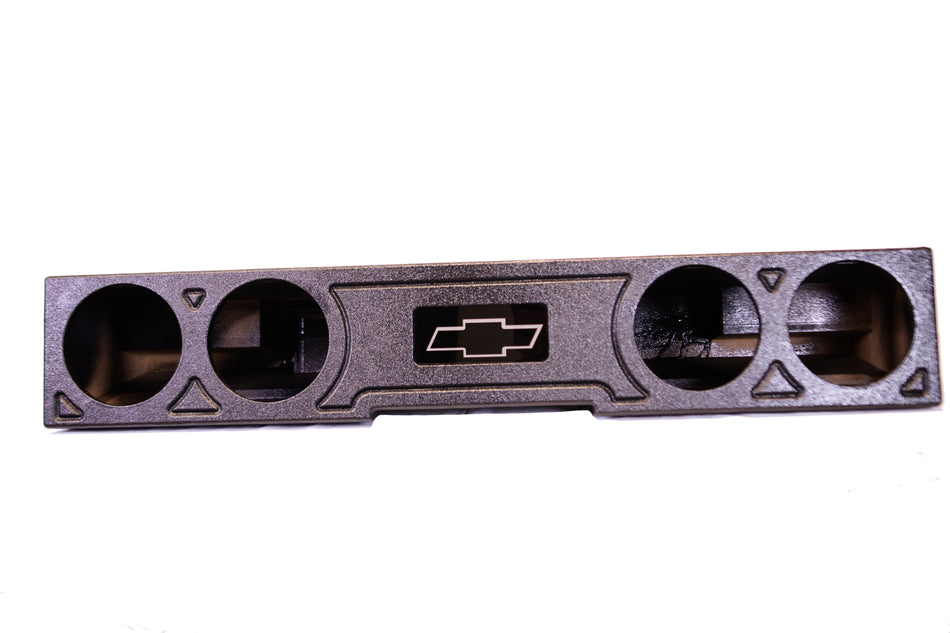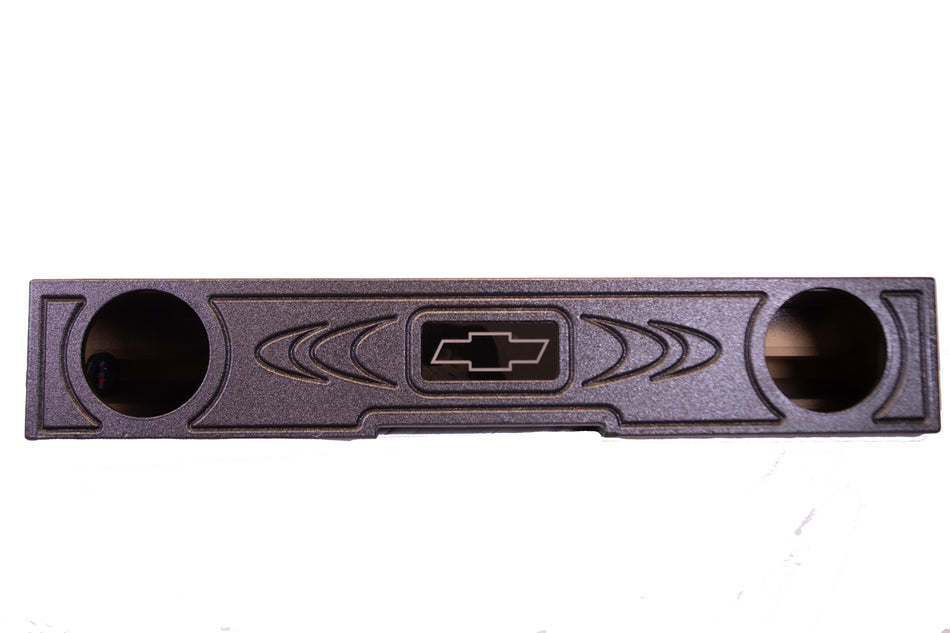

Choosing a subwoofer is only part of building a powerful car audio system. The enclosure surrounding it can have just as much influence on how that subwoofer performs. A well-designed box helps control the movement of the woofer, supports the desired bass response, and makes better use of the available space.
That is why the debate between a fiberglass sub box and an MDF subwoofer enclosure matters. These materials approach enclosure design very differently. MDF is widely used for conventional rectangular and square boxes because it is dense, stable, and relatively easy to work with. Fiberglass, meanwhile, allows builders to create unusual shapes that can follow the contours of a vehicle.
So which one is the best subwoofer box material? There is no universal winner. The right choice depends on the vehicle, available space, subwoofer specifications, desired bass response, budget, and whether you prioritize customization or straightforward construction.
Fiberglass vs MDF: The Basic Difference
Before comparing performance, it helps to understand what makes these materials different.
MDF, or medium-density fiberboard, is an engineered wood product made from compressed wood fibers and resin. It is commonly used for car audio enclosures because it provides a solid, dense construction material and can be cut into predictable panels.
Fiberglass is a composite material made by combining glass fibers with resin. It can be molded into complex shapes, which makes it particularly useful when a conventional rectangular enclosure cannot make efficient use of a vehicle's interior.
In simple terms:
-
MDF favors conventional enclosure construction.
-
Fiberglass favors custom shapes and space optimization.
-
MDF is generally easier for straightforward DIY box building.
-
Fiberglass offers more freedom when designing around vehicle contours.
-
Either material can work well when the enclosure is properly designed and built.
The material alone does not determine whether the bass will be good. Enclosure volume, air leaks, internal bracing, construction quality, and the subwoofer's requirements all matter.
What Makes MDF a Popular Choice for Subwoofer Boxes?
MDF has been a staple of car audio enclosure construction for years. Its popularity comes from its predictable characteristics and suitability for building rigid panels.
A typical MDF enclosure can be constructed from accurately cut pieces that are joined, sealed, and reinforced. This makes it particularly convenient for conventional sealed and ported designs.
Advantages of an MDF Subwoofer Enclosure
1. Solid construction
Properly assembled MDF panels can create a rigid enclosure that resists unwanted movement. That rigidity is important because the enclosure should primarily contain and control the air movement generated by the subwoofer.
2. Easy to build in conventional shapes
If you want a basic rectangular enclosure, MDF is practical. Panels can be measured and cut relatively easily, making the construction process straightforward.
3. Good for standardized designs
Many subwoofer manufacturers provide recommended enclosure dimensions and internal volumes. MDF works well when you want to reproduce those specifications using conventional panel construction.
4. Cost-effective
For many installations, MDF provides an affordable route to building a strong enclosure without requiring specialized molding techniques.
5. Easy to modify
A conventional MDF box can often be adapted for different mounting arrangements, terminals, internal bracing, or cosmetic finishes.
Pro Tip: Do not choose an MDF enclosure simply because the material is common. Check the manufacturer's recommended internal air volume for your specific subwoofer before buying or building the box.
Where Fiberglass Has the Advantage
Fiberglass becomes particularly interesting when the vehicle's available space does not cooperate with a conventional box.
A trunk, hatchback, truck cabin, or side storage area may contain awkward corners, wheel arches, seat contours, or other obstacles. A rectangular MDF enclosure may waste valuable space in these situations.
A fiberglass sub box can be shaped around those obstacles.
Instead of forcing a rectangular enclosure into the vehicle, the enclosure itself can be designed to follow the vehicle's available space.
Benefits of a Fiberglass Sub Box
1. Excellent space utilization
Fiberglass can be molded into shapes that would be difficult or impractical to construct using flat MDF panels.
2. Custom appearance
A molded enclosure can become part of the vehicle's interior rather than looking like a separate box placed inside it.
3. Useful for tight installations
When every inch matters, fiberglass can help take advantage of spaces around side panels, wheel wells, spare-tire areas, and other irregular locations.
4. Design flexibility
Curves, angles, and unusual shapes are possible, giving installers more freedom when designing the enclosure.
5. Potential for integrated builds
Custom fiberglass work can incorporate the enclosure into a larger audio installation, creating a more seamless finished appearance.
Important Note: Fiberglass does not automatically produce deeper or louder bass than MDF. Its biggest advantage is design flexibility. The enclosure still needs the correct internal volume, appropriate construction, and proper sealing.
Fiberglass vs MDF Bass: Does Material Change the Sound?
This is where many car audio discussions become confusing.
People sometimes assume that one material automatically produces better bass. In reality, comparing fiberglass vs MDF bass is more complicated than simply asking which material sounds better.
The enclosure's design has a major influence on the result.
For example, a poorly constructed MDF box with air leaks or incorrect internal volume can perform badly. Likewise, a fiberglass enclosure that has been poorly designed or lacks adequate rigidity may not deliver the expected results.
Important factors include:
-
Internal enclosure volume
-
Sealed or ported design
-
Port dimensions
-
Subwoofer specifications
-
Enclosure rigidity
-
Air leaks
-
Internal bracing
-
Installation location
-
Subwoofer orientation
-
Amplifier power
-
Vehicle cabin characteristics
A properly designed fiberglass enclosure can sound excellent. So can a properly built MDF enclosure.
The question is less about which material "wins" and more about which material allows you to build the right enclosure for your application.
MDF vs Fiberglass for Sealed Enclosures
Sealed enclosures are relatively simple because they do not require a tuned port.
MDF is often an excellent choice when the vehicle has enough room for a conventional box. The flat-panel construction makes it relatively easy to achieve the required internal volume.
Fiberglass becomes attractive when the available space has an unusual shape.
For example, imagine a vehicle with an unused side compartment in the rear cargo area. A rectangular MDF box might consume more usable space than necessary. A custom fiberglass enclosure could potentially follow the compartment's contours.
Which Is Better for Sealed Boxes?
Choose MDF when:
-
You have adequate installation space.
-
A rectangular enclosure fits easily.
-
You want a straightforward construction method.
-
Cost is an important consideration.
-
You are building a conventional enclosure.
Consider fiberglass when:
-
Space is unusually limited.
-
You want a molded enclosure.
-
The installation area has complex curves.
-
Preserving cargo space is important.
-
Appearance and integration matter.
MDF vs Fiberglass for Ported Enclosures
Ported enclosures require more precise design because the enclosure and port work together to create a specific tuning response.
MDF is commonly convenient for this type of construction because flat panels make it easier to construct defined internal dimensions and port structures.
Fiberglass can also be used, but custom construction requires careful attention to the enclosure's final internal volume and port dimensions.
This is especially important because adding layers, reinforcements, curves, or structural components can change the usable internal space.
Important Note: With a ported enclosure, do not estimate the internal volume based only on the outside dimensions. Account for the thickness of the enclosure material, subwoofer displacement, port displacement, and internal bracing when calculating usable volume.
Comparing the Two Materials Side by Side
| Factor | MDF | Fiberglass |
|---|---|---|
| Conventional box construction | Excellent | Less convenient |
| Custom shapes | Limited | Excellent |
| Space optimization | Good | Excellent |
| DIY friendliness | Higher | Lower |
| Complex vehicle contours | Difficult | Excellent |
| Standard enclosure designs | Excellent | Good |
| Cost for basic builds | Usually lower | Usually higher |
| Custom appearance | Good | Excellent |
| Ported enclosure construction | Straightforward | More complex |
| Installation flexibility | Good | Excellent |
This comparison shows why there is no single best subwoofer box material for every vehicle.
What About Enclosure Strength?
Strength is another area where people often oversimplify the comparison.
A good enclosure should remain structurally stable while the subwoofer is operating. If enclosure panels flex excessively, some of the energy that should contribute to the intended acoustic output can be lost through unwanted movement.
MDF can provide excellent rigidity when properly constructed, especially when thicker material and appropriate bracing are used.
Fiberglass can also produce a strong enclosure, but its strength depends heavily on construction technique, material thickness, reinforcement, and design.
A poorly constructed fiberglass shell should not automatically be considered superior to a properly braced MDF enclosure.
Pro Tip: Think about the entire construction, not just the material name. Thickness, reinforcement, joints, mounting surfaces, and sealing can be just as important as whether the enclosure is MDF or fiberglass.
Weight: Another Factor to Consider
MDF is dense, which contributes to its solid construction but also makes large enclosures relatively heavy.
Fiberglass can offer opportunities to reduce weight while creating custom shapes, although the final weight depends on how the enclosure is engineered and reinforced.
For a permanent trunk installation, weight may not matter much.
For applications where equipment is regularly removed or where available payload is important, weight can become more significant.
This makes fiberglass particularly interesting for specialized installations where the enclosure must balance shape, strength, and weight.
Which Material Is Better for a Custom Sub Box?
If your goal is a custom sub box material that can adapt to unusual vehicle spaces, fiberglass has a clear advantage.
A custom fiberglass enclosure can be shaped around:
-
Wheel wells
-
Side compartments
-
Rear interior panels
-
Seat contours
-
Storage cavities
-
Irregular trunk spaces
-
Custom interior structures
MDF can still be customized, but the design usually relies on cutting and assembling flat panels.
That is perfectly suitable for many installations. It simply has more geometric limitations.
For a simple trunk build, those limitations may not matter at all.
For an integrated show-style installation, they can make a major difference.
Which One Is Better for DIY Builders?
For beginners, MDF is usually the easier starting point.
The construction process is more familiar: measure panels, cut them, assemble them, seal the joints, add bracing where needed, and finish the exterior.
Fiberglass requires more specialized handling and fabrication skills. Building a clean molded enclosure involves creating a shape, laying fiberglass and resin, reinforcing the structure, finishing the surface, and carefully calculating the final internal volume.
That does not make fiberglass a bad DIY option. It simply means the learning curve can be steeper.
If this is your first enclosure project, a properly designed MDF box can be a more practical introduction to enclosure construction.
Pro Tip: If you are new to enclosure building, start with the subwoofer manufacturer's recommended enclosure volume and design. Getting the fundamentals right is more important than choosing the most exotic construction material.
Common Mistakes When Choosing an Enclosure Material
The material debate can distract from more important considerations.
Choosing Based Only on Appearance
A beautiful enclosure will not compensate for incorrect volume or poor construction.
Ignoring the Subwoofer Specifications
Different subwoofers have different enclosure requirements. Always start with the manufacturer's recommendations.
Forgetting Internal Volume
The usable air space inside the enclosure matters more than simply measuring the outside of the box.
Assuming More Material Means Better Bass
A thicker or heavier enclosure is not automatically a better enclosure. Construction needs to be appropriate for the subwoofer and design.
Overlooking Vehicle Space
A box that sounds great on paper may be impractical if it eliminates the cargo space you actually need.
Poor Sealing
Air leaks can undermine enclosure performance, particularly in sealed designs.
Neglecting Installation Security
The enclosure should be securely mounted so it cannot move around during normal driving.
How to Choose the Best Subwoofer Box Material for Your Vehicle
Instead of asking which material is universally superior, work through these questions:
1. How much space do you have?
If you have plenty of room, MDF may provide a simple and cost-effective solution.
2. Is the installation area irregular?
If the space contains curves and awkward corners, fiberglass becomes more attractive.
3. Are you building the enclosure yourself?
MDF is generally easier for a first project.
4. Do you want a seamless custom appearance?
Fiberglass provides greater design freedom.
5. What does your subwoofer require?
This should always be one of the first considerations. The enclosure needs to meet the woofer's recommended specifications.
6. How important is cargo space?
If preserving usable space is a priority, a custom-shaped fiberglass enclosure can offer a major advantage.
7. What is your budget?
A straightforward MDF enclosure is typically easier to build economically, while custom fiberglass fabrication can require more time, materials, and skill.
When MDF Is the Better Choice
Choose MDF when you want a reliable, conventional enclosure without unnecessary fabrication complexity.
It makes particular sense when:
-
You have sufficient space.
-
You want a rectangular or standard-shaped box.
-
You are building a sealed or ported enclosure from established dimensions.
-
You are working with a limited fabrication budget.
-
You want a DIY-friendly project.
For many everyday car audio systems, MDF checks all the important boxes.
When Fiberglass Makes More Sense
Fiberglass becomes the stronger choice when the installation itself is the challenge.
It can make sense when:
-
Every inch of space matters.
-
You want to use an awkward storage area.
-
The enclosure needs to follow interior contours.
-
You want a highly integrated appearance.
-
A conventional MDF box would interfere with cargo or passenger space.
-
You are comfortable with custom fabrication or are working with an experienced installer.
The biggest advantage is not automatically better acoustics. It is the freedom to build the enclosure around the vehicle rather than forcing the vehicle to accommodate the box.
4 FAQs About Fiberglass and MDF Subwoofer Enclosures
1. Is fiberglass better than MDF for subwoofer enclosures?
Not universally. MDF is excellent for conventional enclosures, while fiberglass is particularly useful for complex shapes and space-limited installations. Proper design and construction are more important than the material alone.
2. Does a fiberglass sub box produce deeper bass?
Not simply because it is fiberglass. Bass performance depends on factors such as enclosure volume, design, tuning, subwoofer characteristics, installation, and system setup.
3. What is the best subwoofer box material for a beginner?
MDF is generally easier for beginners because conventional panel construction is simpler to measure, cut, assemble, and seal.
4. Can you build a ported enclosure from fiberglass?
Yes. Fiberglass can be used for ported enclosures, but the internal volume and port dimensions need to be carefully calculated. Custom shapes can make those calculations more involved.
The Right Box Starts With the Right Priorities
The fiberglass versus MDF debate does not have a one-size-fits-all winner.
MDF wins for simplicity, conventional construction, affordability, and straightforward enclosure designs. Fiberglass wins when customization, space efficiency, and complex vehicle integration are the priorities.
For a standard trunk setup, a properly designed MDF subwoofer enclosure may be all you need. If you're trying to fit a subwoofer into an unusual space without sacrificing the rest of the vehicle's interior, a custom fiberglass enclosure can open up far more possibilities.
Ultimately, the best subwoofer box material is the one that lets you achieve the correct enclosure design while fitting your vehicle, subwoofer, budget, and listening goals.